Exploring the Top Cairo Museums in 2026 (Tahrir, GEM, and NMEC)
Welcome to Egypt! Let me take you on a quick behind-the-scenes tour.
Imagine standing in the heart of Cairo, the scent of history all around you. As your tour guide, I don’t want you to just “see” the artifacts—I want you to “experience” their story. In 2026, visiting museums is no longer just about buying a ticket and walking in; it’s a journey through time that requires understanding the unique “character” of each place before you step inside.
Today, we have three completely different experiences, like reading one book told in three distinct voices:
Tahrir Museum: The “old house” steeped in authenticity, where every corner tells the story of how writing, sculpture, and daily life evolved.
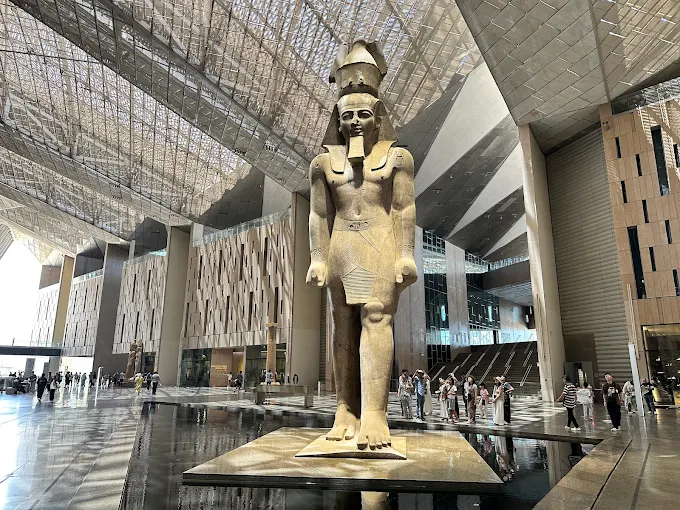
Grand Egyptian Museum (GEM): The “palace of wonder” and home of Tutankhamun, where technology meets the majesty of the pyramids.
National Museum of Egyptian Civilization (NMEC): The “time capsule” that condenses thousands of years into two hours, bringing you face-to-face with Egypt’s greatest kings.
Before booking your tickets, let’s agree: there is no “best” museum, only the one that matches your passion and time.
1. Egyptian Museum at Tahrir – The Classic Spirit
After the official opening of GEM and the relocation of Tutankhamun’s complete “golden collection” in late 2025, many asked:
“Has Tahrir Museum’s role ended?”
The answer in 2026: Tahrir has entered its true golden era as a museum for specialists and lovers of authentic history.
What changed in 2026?
The museum is no longer a crowded storage space but has undergone careful redevelopment and reorganization:
- Revitalized galleries: Overcrowded areas were cleared to give remaining artifacts “room to breathe” and to present them in a more fluid, engaging manner.
- Exhibition updates: New lighting and updated information panels make the experience clearer and easier to understand for independent visitors.
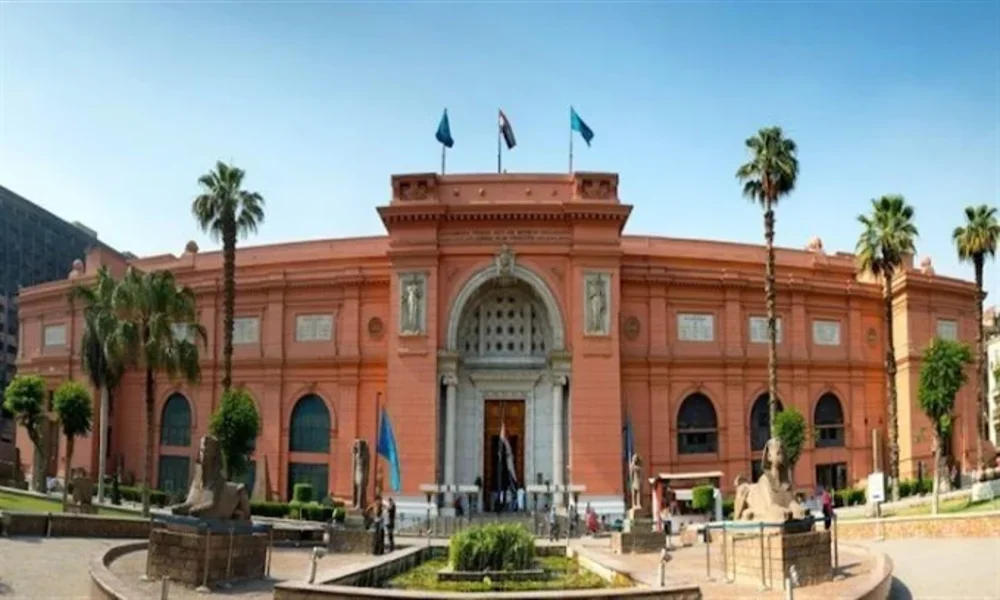
- Architecture: Visitors can now fully appreciate the neoclassical building (opened in 1902), one of Cairo’s earliest purpose-built museums, giving it a unique architectural grandeur.
Highlights you might have missed:
- Tanis Treasures: Sometimes called “Tutankhamun of the North,” these pieces rival Tut’s in craftsmanship and gold value, though they remain less publicized.
- Yuya and Thuya Treasures: Luxurious artifacts revealing the lavish lives of New Kingdom nobles.
- Narmer Palette: The first political document in history, depicting the unification of Egypt around 3100 BCE.
- Small Khufu Statue: Remarkably, the Pharaoh of the Great Pyramid is represented only by this tiny 7 cm ivory statue, still housed at Tahrir.
What defines the Tahrir experience today?
- Authentic archaeological density: Feel like you’ve entered a “school” of Egyptology, where civilization accumulates in all its classical richness.
- Central location: Right in the heart of Cairo, allowing easy access to the vibrant downtown area.
- Affordable: The best choice for mid-range budgets (~450 EGP for foreigners).
What you won’t find here:
- Tutankhamun treasures (now at GEM).
- Royal mummies (permanently housed at NMEC in Fustat).
Visitor’s key takeaway: In 2026, Tahrir is a museum of “concentrated history,” not visual spectacle. Start here if you want to understand Egypt’s beginnings.
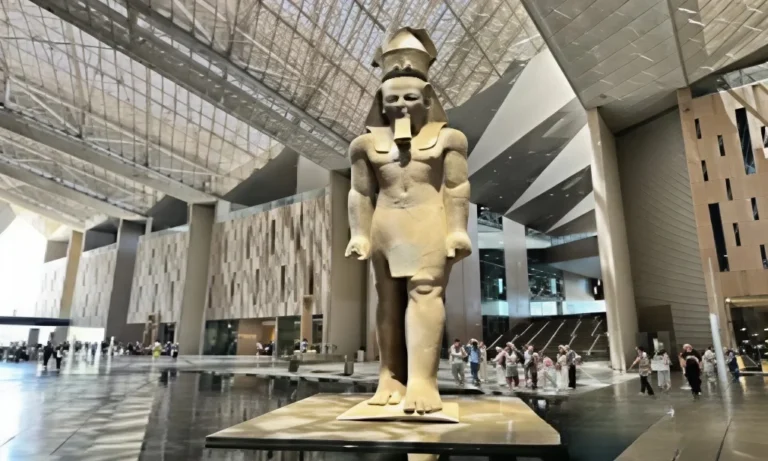
2. Grand Egyptian Museum (GEM) – The Spectacle
By 2026, the “trial openings” are over. GEM is now the world’s largest museum dedicated to a single civilization, operating at full capacity after its official grand opening.
What awaits you in 2026?
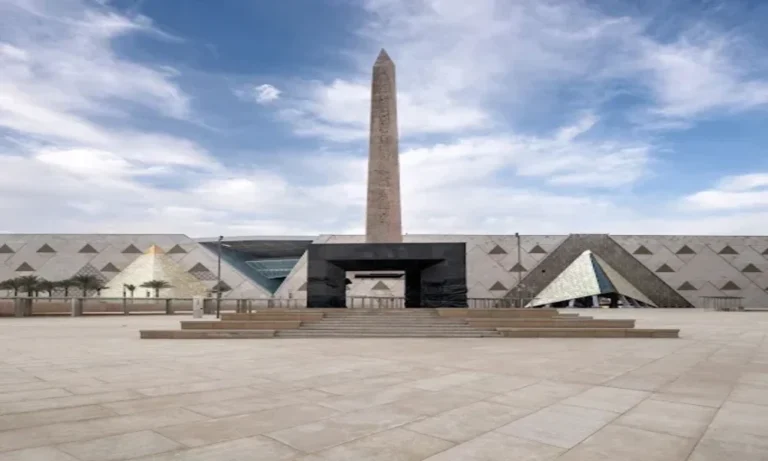
It’s no longer just about the hanging obelisk or the grand atrium—you can now explore every main gallery and follow the complete visitor route.
Star Attraction: Tutankhamun like never before
For the first time since the tomb’s discovery in 1922, the full collection (over 5,000 artifacts) is displayed together.
You’ll encounter his golden mask, sarcophagus, furniture, chariots, clothing, and daily tools, all integrated into a meticulously curated narrative.
2026 Surprise: Khufu Solar Boat Museum
The original solar boat of Pharaoh Khufu (4,500 years old) has been moved from its pyramid site into a dedicated glass building within GEM.
Seeing it in a modern, climate-controlled environment is an unforgettable visual and historical experience.
Visiting experience:
- Organization: Spacious galleries with chronological and thematic pathways eliminate crowding issues.
- Grand Staircase: A majestic climb past massive royal statues, appearing as guardians en route to the pyramids.
- Panoramic view: A giant glass window frames the royal statues against the Giza pyramids—a photographer’s dream.
What you won’t find here:
- Royal mummies (still at NMEC in Fustat), though GEM compensates with advanced digital and interactive displays explaining mummification techniques and life in ancient Egypt.
Cost:
Tickets are the highest-priced in Egypt (1,450–1,800 EGP for foreigners), but it’s an investment in an experience that rivals the world’s leading museums.
Visitor’s key takeaway: GEM in 2026 is “history told to the world.” Go if you want to awe your senses and enjoy a fully immersive experience in the shadow of the pyramids.
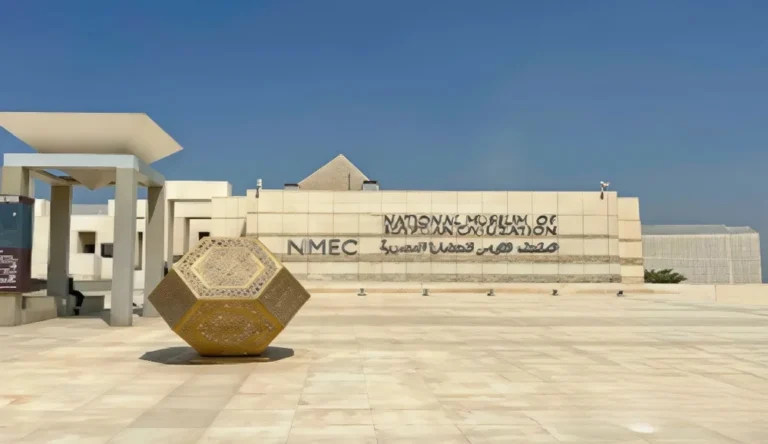
3. National Museum of Egyptian Civilization (NMEC) – The Majesty
Looking for the most frequently asked question:
“Where are the royal mummies?”
In 2026, the answer is neither Tahrir nor GEM—it’s here, at NMEC in Fustat.
Why it’s a must-visit:
This museum doesn’t compete on the number of artifacts—it excels in the majesty of the experience. It houses the “real Egyptians” whose lives created the artifacts displayed elsewhere.
Star Attraction: Royal Mummies Gallery
Meet Egypt’s legendary rulers you’ve read about in history books: Ramses II, Seti I, Hatshepsut, and more.
The gallery is underground, designed to evoke the Valley of the Kings, with dim lighting and a solemn atmosphere that inspires awe and reverence.
One-day visitor experience
In just two hours, follow a complete journey through Egypt’s history:
- Prehistoric Egypt (including the oldest human skeleton found in Egypt)
- Pharaonic periods
- Coptic and Islamic eras
- Contemporary heritage (e.g., the Kiswa of the Holy Kaaba)
What sets NMEC apart in 2026:
- Clarity: Focuses on concepts rather than just piling up artifacts, making it easier for children and non-specialists to understand.
- Facilities: Overlooking Ain El-Sira Lake, with cafés, relaxation areas, and modern designs ensuring physical comfort.
What you won’t find here:
- Tutankhamun treasures (at GEM)
- Classic archaeological density (at Tahrir)
Visitor’s key takeaway: NMEC in 2026 is “face-to-face with the kings.” Go if you want to look Ramses II in the eye and understand how these rulers lived—and preserved their legacy for eternity.
The Definitive 2026 Comparison: Tahrir vs. GEM vs. NMEC
Feature | Tahrir Museum (Classic Spirit) | Grand Egyptian Museum GEM (Wonder & Future) | NMEC (Royal Mummies) |
Star Attraction | Tanis Treasures + Narmer Palette | Full Tutankhamun Collection + Khufu Boat | Royal Mummies |
2026 Status | Redeveloped & reorganized | Fully open, all galleries accessible | Fully operational & smooth flow |
Mummies | Animal mummies + high priest mummies | Digital/interactive only | 22 real royal mummies |
Cost (Foreigners) | Affordable (~450 EGP) | Highest in Egypt (1,450–1,800 EGP), but worth it | Moderate (~500–600 EGP) |
Best for | History enthusiasts & seekers of “core” experience | First-time visitors & lovers of spectacle | “Face-the-kings” enthusiasts & condensed history seekers |
Philosophical Difference (How to Choose)
Beyond schedules and prices, the key distinction lies in the spirit of each experience, as noted by tourism experts in 2026:
- Tahrir: You “discover.” The experience resembles an Indiana Jones adventure—you roam among artifacts, search for details, and absorb classical Egyptology in the old building. A museum for treasure hunters at heart.
- GEM: You “follow a story.” History is guided by technology and narrative; the museum leads you through an organized, immersive journey, showcasing civilization and Egypt’s modern ambition on a world-class stage.
- NMEC: You “face history.” The most human and profound experience: you stand before real mummies of rulers who shaped history. It’s a moment of awe and calm, confronting the eternity of civilization.
Summary: Tahrir is “heritage,” GEM is “spectacle,” and NMEC is “majesty.”
Planning Your Visit Smartly in 2026 (Guide from a Tour Expert)
Realistic time allocation per museum:
Avoid overly optimistic schedules; here’s what you need to enjoy each experience fully:
- Tahrir Museum: 2–3 hours for a focused tour of key treasures and architecture
- GEM: 4–5 hours due to vast spaces, full Tutankhamun exhibition, and Khufu Boat Museum
- NMEC: 1.5–2 hours; the path is structured and smooth, focused mainly on the mummies
Suggested visit scenarios:
- One day: Head straight to GEM for the most comprehensive and impressive experience, with a chance to see the pyramids the same day.
- Two days:
- Day 1: GEM
- Day 2: NMEC (face the kings) + nearby religious complex tour
- History lovers (3+ days): Don’t skip any: start at Tahrir to grasp the roots, then GEM for spectacle, and finish at NMEC to meet the kings.
Common Mistakes to Avoid in 2026
- Assuming Tahrir is obsolete: A major mistake. With Tutankhamun gone, Tahrir is quieter and more focused. Skip it, and you miss the essence of Egyptology.
- Ignoring walking distances at GEM: GEM is massive. Many visitors get exhausted if they underestimate the distances between galleries, atrium, and the Boat Museum. Wear comfortable shoes.
- Looking for mummies in the wrong place: Don’t search for Ramses II or Hatshepsut in Giza (GEM) or downtown Cairo (Tahrir). Royal mummies are exclusively at NMEC.
- Trying to visit all three museums in one day: Tourist suicide! You’ll turn enjoyment into physical strain. Limit to two museums per day if they’re close (like Tahrir and NMEC).
- Ignoring updated ticket pricing: In 2026, ticket packages—especially at GEM—vary by gallery. Check the official site or ask your guide about “all-access” packages to ensure entry to the Boat Museum and Grand Staircase.
By 2026, the question is no longer, “Which museum is better?” The real question is, “What kind of experience do I want?” If you seek legendary treasures and world-class presentation, your destination is the Grand Egyptian Museum (GEM). If you want the depth of history and a dense collection of artifacts, start with the Egyptian Museum at Tahrir. And if you wish to look Ramses II in the eye and encounter the royal mummies, you’ll find your destination at the National Museum of Egyptian Civilization (NMEC) in Fustat. These three museums do not compete—they complement each other. Understanding this is the key to a truly complete experience of Egypt’s museum landscape today.
Don’t leave your journey to chance! Ready for a fully immersive, unforgettable experience at the heart of Egypt’s civilization?
Plan your visit now and book tours easily via grand egyptian museum tour — your go-to guide for selecting the right tickets, organizing your schedule, and getting expert tips for GEM, Tahrir Museum, and NMEC.
Make your journey through history organized, comfortable, and full of discovery.