The Treasures of Giza: Updated 2026 Guide to the Grand Egyptian Museum (GEM)
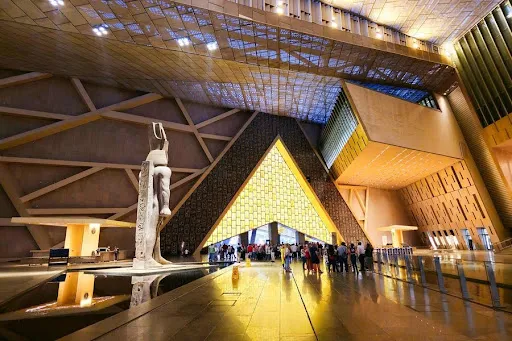
The Grand Egyptian Museum (GEM) is the world’s largest archaeological museum dedicated to a single civilization — the ancient Egyptian world — and the centerpiece of a decades‑long effort to reunite and conserve Egypt’s collection. More than 20 years in the making, the grand Egyptian museum complex houses hundreds of thousands of objects and artefacts, with purpose-built storage and conservation labs that set new standards for preservation and public display.
Situated at the foot of the Giza Pyramids, the GEM offers dramatic views of the Great Pyramid and easy access from central Cairo — an ideal base for combining a museum visit with the Giza pyramids plateau. The site’s layout and visitor routes make it straightforward to move between galleries, outdoor plazas, and dining areas within the complex.
As of 2026 most major galleries — including the much‑anticipated King Tutankhamun galleries — are open to the public following the museum’s phased opening (note: some temporary exhibitions and behind‑the‑glass restoration labs may operate on limited schedules). Check the official site for the latest opening notices and timed‑entry information to plan your visit.
Planning Your Visit: Logistics & Essential Tips
How to Get Tickets
- Online Only: Buy official tickets in advance via the GEM portal: visit-gem.com. Choose a timed entry slot and keep your confirmation (printed or on your phone).
- Check Pricing: Before booking, it is highly recommended to check the updated Grand Egyptian Museum ticket prices for foreigners, as rates differ for adults, students, and children.
- Avoid scalpers and long queues by booking 24–72 hours ahead; official tickets are the only guaranteed entrance.
Best Time to Visit
- 9:00 AM is the golden hour—arrive at opening to beat tour buses and enjoy quieter galleries.
- For cooler temperatures and softer light on the exterior plazas, visit early morning or late afternoon; midday is busiest.
Getting There
- Options: Uber, private taxi, or the Pyramid Pedestrian Walkway from the nearby plateau. Taxis/Uber are convenient from Cairo; agree a price or use the app to avoid confusion.
- If you stay in a Giza hotel, walking is possible for a scenic approach — allow extra time for security checks at the entrance.
Accessibility, Bags & Storage
- GEM is largely accessible: ramps, elevators, and wheelchair routes connect main galleries.
- Security screening is standard. Large backpacks may be restricted—use the museum’s storage/coat check where available.
- If you need assistance, request help at the main entrance or book an accessible guided tour in advance.
What to Wear & What to Bring
- Wear light, breathable clothing and dress respectfully for a museum and religious sites nearby.
- Comfortable shoes are essential — expect a kilometer or more of walking across galleries and outdoor areas.
- Bring a small water bottle, sun protection for outdoor plazas, and a portable charger for phones or audio guides.
Extra Practical Tips
- Buy tickets online 24–72 hours before your visit, arrive at least 20 minutes before your entry slot, and download or screenshot your booking confirmation. If you prefer not to use a smartphone, authorized travel desks in Cairo can pre-purchase official tickets.
The “Big Three” Must-See Exhibits
1- Tutankhamun Galleries
For the first time, visitors can see an unprecedented grouping of king tutankhamun treasures: the galleries bring together more than 5,000 artefacts and objects related to Tutankhamun’s life and burial, giving a fuller picture of the tomb’s original contents. What to expect: jewelry, funerary equipment, chariot pieces and the famous golden mask are displayed in climate‑controlled cases; allow 30–60 minutes here and note that flash photography is prohibited and some pieces are viewed from a distance to protect fragile gold and pigments.
2- Solar Boat of Khufu
The reconstructed Solar Boat of Khufu — a roughly 4,600‑year‑old vessel associated with the pharaoh of the Great Pyramid — is housed in a dedicated, climate‑controlled pavilion that highlights ancient shipbuilding and ritual practice. What to expect: detailed conservation work on display and interpretive panels explaining construction and symbolism; plan 20–30 minutes to view the boat and nearby display pieces that place it in the context of funerary beliefs.
3- The Grand Staircase
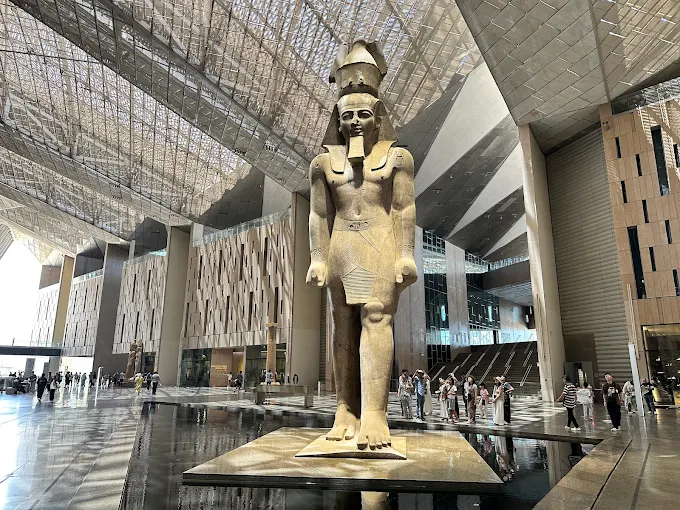
The dramatic vertical route through the grand museum culminates with a monumental staircase lined by more than 60 colossal statues and reliefs — a deliberately staged journey that recreates the effect of approaching ancient royal power. What to expect: a powerful “reveal” of the giza pyramids from the upper levels and excellent photo opportunities (no flash in galleries). Allow 15–25 minutes to enjoy the ascent and take in the scale of the collection.
Deep Dive: The 12 Main Galleries
Chronological Journey
- Organized from Pre‑Dynastic to Greco‑Roman periods, the grand egyptian museum presents Egypt’s long sweep of history in clear chronological order to help visitors follow cultural and artistic change over time.
- Each gallery follows curated historical timelines with contextual labels and multimedia displays so you can see how objects and practices evolved across centuries.
Gallery Themes (at a glance)
- Dedicated halls for Kingship, Society, and Beliefs showcase royal tomb goods, administrative records, and religious paraphernalia that illustrate governance and ideology.
- Expect murals, smaller statues, everyday objects and tomb assemblages that reveal domestic life, craft, and ritual across ancient egyptian history.
The 12 Main Galleries (quick list)
1. Pre‑Dynastic & Early Dynastic — origins and early state formation.
2. Old Kingdom — pyramids, funerary culture and royal statuary.
3. Middle Kingdom — administration, literature and provincial life.
4. New Kingdom — empire, temples and elite tomb assemblages.
5. Third Intermediate & Late Periods — changing artistic styles.
6. Ptolemaic & Greco‑Roman — syncretism and Mediterranean contacts.
7. Tutankhamun Galleries — concentrated Tut artifacts and funerary items.
8. Royal Mummies & Funerary Rituals — select royal bodies and burial science.
9. Sculpture & Colossal Works — large statuary and reliefs.
10. Everyday Life — tools, pottery, textiles and household objects.
11. Crafts & Workshops — jewelry, woodworking and metalwork displays.
12. Conservation & Storage — visible labs and purpose-built storage showing preservation work.
Each gallery groups related pieces and statues to tell coherent stories — estimated walkthrough time for all 12 is 3–6 hours depending on depth (plan a focused 1–2 hour visit if you prefer highlights).
The Royal Mummies — important notes
- GEM’s royal mummies presentation differs from the NMEC; the museums complement each other rather than duplicate displays.
- Visitors can see selected mummies under controlled conditions; access and viewing times may be limited to protect fragile remains and respect conservation protocols.
Beyond the Statues: The GEM Experience
Interactive Tech
- VR & AR stations bring ancient sites to life: immersive reconstructions let you step inside reconstructed temples and tombs, explore painted chamber walls at close range, and view 3D models of carved statues and pieces. These stations are ideal for history fans who want context beyond label copy; plan 10–20 minutes per station and check the museum app or signage for availability.
Children’s Museum
- The family zone includes hands‑on learning modules, interactive displays and age-appropriate exhibits designed to introduce kids to ancient egyptian life, crafts and storytelling. Stroller‑friendly routes, child-sized interactives and short workshops make the children’s museum a good half‑day option for families; some activities may require advance booking or a small extra fee.
Dining & Shopping
- Al Mashrafia Commercial Zone offers a range of dining options from casual cafés to upscale restaurants with views of the pyramids — ideal for combining a museum visit with lunch or an evening meal. Reservations are recommended for peak times and some venues may have dress or booking policies.
- The official gift shop stocks high‑quality souvenirs, books and licensed replicas (look for authenticity labels). Tip: compare prices and check export/customs rules for items made of natural materials or precious metals.
Accessibility notes: dining areas and shops are accessible; family restrooms and baby‑changing stations are located near main visitor routes. For the latest opening hours and any special events (including temporary closures or extended hours announced after the november 2025 phased opening), check the GEM website or onsite notices before you go.
Pro-Traveler Itineraries
The “Express” Route (3 Hours)
- Sample timeline (approx. 3 hours): 9:00–9:20 Atrium & orientation → 9:20–10:20 King Tutankhamun galleries (highlights: mask, jewelry) → 10:30–11:00 Grand Staircase and rooftop views of the Giza Pyramids. Ideal for visitors short on time who want the headline displays.
The “Deep Dive” (6+ Hours)
- Sample timeline (6+ hours): 9:00–11:00 Full walk through the chronological galleries → 11:15–12:00 Solar Boat of Khufu and related exhibits → 12:15–13:15 Lunch at Al Mashrafia → 13:30–15:30 Specialized galleries (sculpture, crafts, conservation labs) → 15:30–16:00 Gift shop and wrap-up. This route suits history buffs, researchers, and photography enthusiasts who want time with individual pieces.
- Tip: use the museum map to prioritize sections and reserve time for conservation labs if available — they offer rare behind‑the‑scenes insight into preservation work.
The Giza Power Day
- Combine GEM, the Pyramids, and the Sphinx in one seamless day: 8:30 arrival at GEM (early slot) → 9:00–11:30 GEM highlights → 12:00 lunch near the plateau → 13:30–16:00 Pyramids & Sphinx visit (allow time for parking/security) → 16:30 sunset photos of the Great Pyramid. Buying GEM tickets in advance and planning pyramid entry times ahead makes this realistic for most visitors.
- Practical logistics: purchase GEM timed‑entry online, then check pyramid ticketing (some areas offer same‑day tickets on site); factor in traffic and security lines when booking afternoon activities.
Alternate options: a senior‑friendly itinerary reduces walking and adds more seating/rest stops; a family itinerary includes the children’s museum and interactive tech stations. Need a ready plan? Consider downloading the printable “3 GEM itineraries” PDF (make it a CTA linking to the booking page) to book guides or restaurant reservations in advance.
Photography tips: wide‑angle lenses work best for the Grand Staircase; avoid flash in galleries and respect signage around fragile objects. For the best pyramid sunset shots, aim for an elevated GEM terrace late afternoon.
Common Misconceptions & Mistakes
- GEM vs. Tahrir (and other museums): The Grand Egyptian Museum was built to house a vast portion of Egypt’s archaeological collection in a purpose‑built complex; official figures list GEM’s total object capacity and purpose‑built storage as far larger than older city museums. That said, Cairo’s Tahrir (Egyptian Museum in Tahrir) and the NMEC each hold unique, historically important displays — the museums complement one another rather than duplicate exhibits. When comparing museums, cite collection counts and gallery focus rather than saying one is simply “bigger.”
- Pyramids access Myth: Visitors often ask whether the pyramids are “inside” the GEM — they are not. The giza pyramids are visible from parts of the GEM complex (including upper terraces and the Grand Staircase reveal), but actual pyramid entrances and interior access are separate and require a separate visit and ticket at the plateau.
- Don’t skip the restoration labs: One of the most interesting parts of the visitor experience is the visible conservation and storage area — glass‑fronted labs let you watch conservators at work on fragile statues, tomb fragments and delicate pieces. Check the museum schedule for demonstrations or timed viewings; these sessions show the careful work that ensures nothing remains neglected in long‑term storage.
Quick tip: if you want precise numbers for comparisons (objects on display, storage capacity), use official GEM press materials or the Ministry of Tourism releases — include these citations in any factual rewrite to avoid absolute claims.
FAQs
1: Can I buy tickets at the gate?
Generally no — official GEM tickets are sold online through the museum portal: visit-gem.com. Buy a timed‑entry slot 24–72 hours in advance where possible. Tip: if you don’t use a smartphone, authorized travel desks in Cairo can purchase official tickets for you.
2: Is photography allowed?
Yes for personal use, but no flash or tripods in artifact galleries. Commercial shoots and professional equipment usually require prior permission and a permit — contact GEM’s press/permits office. Tip: bring a wide‑angle lens for the Grand Staircase and turn off flash to protect pigments and gilding.
3: Is the GEM kid-friendly?
Yes — the museum includes interactive zones and a children’s museum designed for families, plus stroller‑friendly routes and family restrooms. Check schedules for kid workshops or guided family programs; some activities may have limited capacity or small fees.
4: How long should I spend?
Allow a minimum of 3 hours for the Express highlights (Atrium, King Tutankhamun galleries, Grand Staircase). For a fuller experience that covers most of the 12 main galleries and special exhibitions, plan 6+ hours or a full day.
5: Are there guided tours?
Yes — official guided tours and specialist tours (by period or theme) can be booked online; self‑guided visits are also easy with the museum map and signage. For accessibility or group bookings, reserve guides in advance to guarantee availability.
The Grand Egyptian Museum (GEM) offers an unparalleled journey through Egypt’s ancient civilization, from the treasures of Tutankhamun to the grand scale of monumental artifacts. Whether it’s your first visit or a deeper exploration, GEM promises an unforgettable experience.
Book your guided tour now and enjoy a seamless trip that includes the museum and the pyramids with expert guides